
Franz Bischoff

Franz A. Bischoff (1864–1929) “The King of the Rose Painters” lauded as a premiere ceramic glazer also became known as a master of color in his plein-air landscape canvases. Franz became a world-renowned artist and a leading figure in the California Impressionist movement. He is often remembered as a master of two genres: the "King of the Rose Painters" for his exquisite ceramic work and later an expert plein-air painter of landscapes of the American West.
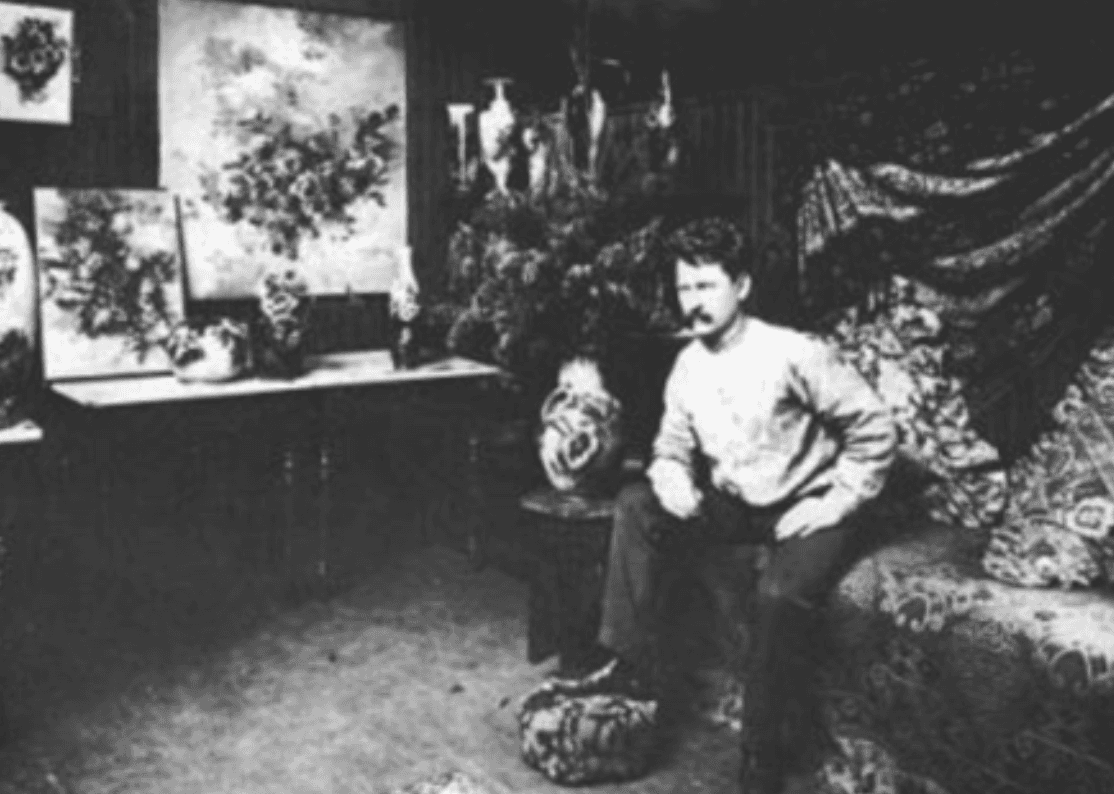
Bischoff’s arrival in South Pasadena in 1906 marked a pivotal shift in his career from decorative arts to fine art painting. He was a central figure in the vibrant art colony that thrived along the Arroyo Seco. He chose this area for its dramatic natural light, sycamore trees, and the rugged beauty of the canyon, which he captured in many of his most famous works. In 1909, Bischoff helped found the California Art Club, one of the oldest and most prestigious professional art organizations in the country. The club's second official meeting was held at his South Pasadena studio-home in 1910.
An avid gardener, Bischoff planted extensive rose gardens on his property. These flowers served as the live models for his legendary china painting and his later floral oil canvases. Bischoff lived and worked in a cottage that he designed himself at 320 Pasadena Avenue, South Pasadena. The Italian Renaissance home was a structure that reflected the significant wealth he had earned from his earlier career in Michigan as a teacher and manufacturer of ceramic glazes. It served as his home, professional gallery, ceramic workshop, and painting studio.
The Franz Bischoff studio was still intact in 1962 when journalist Ed Ainsworth visited his widow and raved about his ceramics and paintings. The studio had been left untouched since his death in 1929. It has since been demolished.